
Florida Police Blotter Records
Florida police blotter records are public documents that log daily law enforcement activity across the state. Each of Florida's 67 sheriff's offices and municipal police departments maintains incident reports, arrest records, and crash reports available under Chapter 119 of Florida Statutes. You can search these police blotter records online through county portals, request them in person at law enforcement agencies, or access crash reports through the Florida Department of Highway Safety and Motor Vehicles. These records provide details on arrests, traffic crashes, and police calls for service in Florida communities.
Florida Police Blotter Quick Facts
Where to Find Police Blotter Records in Florida
Florida maintains police blotter records at two levels. County sheriff's offices handle unincorporated areas and some cities under contract. Municipal police departments serve incorporated cities and towns. Each agency keeps its own incident reports, arrest logs, and booking records. The Florida Department of Highway Safety and Motor Vehicles operates a central crash report system at flhsmv.gov/traffic-crash-reports that covers all traffic crashes statewide.
Most Florida law enforcement agencies maintain online portals for public records requests. Some counties use shared systems like JustFOIA or GovQA to process requests. You can visit agency websites to submit requests electronically. In-person visits to sheriff's offices or police departments allow you to request records at front desk windows during business hours. Many agencies charge copy fees per page plus service charges for requests that take more than 15 minutes to fulfill.
The Florida Department of Law Enforcement at fdle.state.fl.us serves as the state criminal history repository. FDLE maintains records on arrests, criminal charges, and officer complaints. For crash reports specifically, the online purchasing portal at services.flhsmv.gov/CrashReportPurchasing lets you buy reports for $10 plus a $2 convenience fee. Reports become available within 48 hours of purchase.
Chapter 119 of Florida Statutes governs all public records in the state. Under Florida Statutes Section 119.01, every person has a right to inspect and copy public records. This law applies to police blotter records held by sheriff's offices and police departments. Agencies must acknowledge requests promptly and respond in good faith.
How to Search Police Blotter Records
Florida offers several ways to access police blotter records. Online portals provide the fastest access for most record types. Many sheriff's offices operate booking inquiry systems that show recent arrests with mugshots and charges. These databases update daily and are free to search. City police departments often post crime statistics and selected incident summaries on their websites.
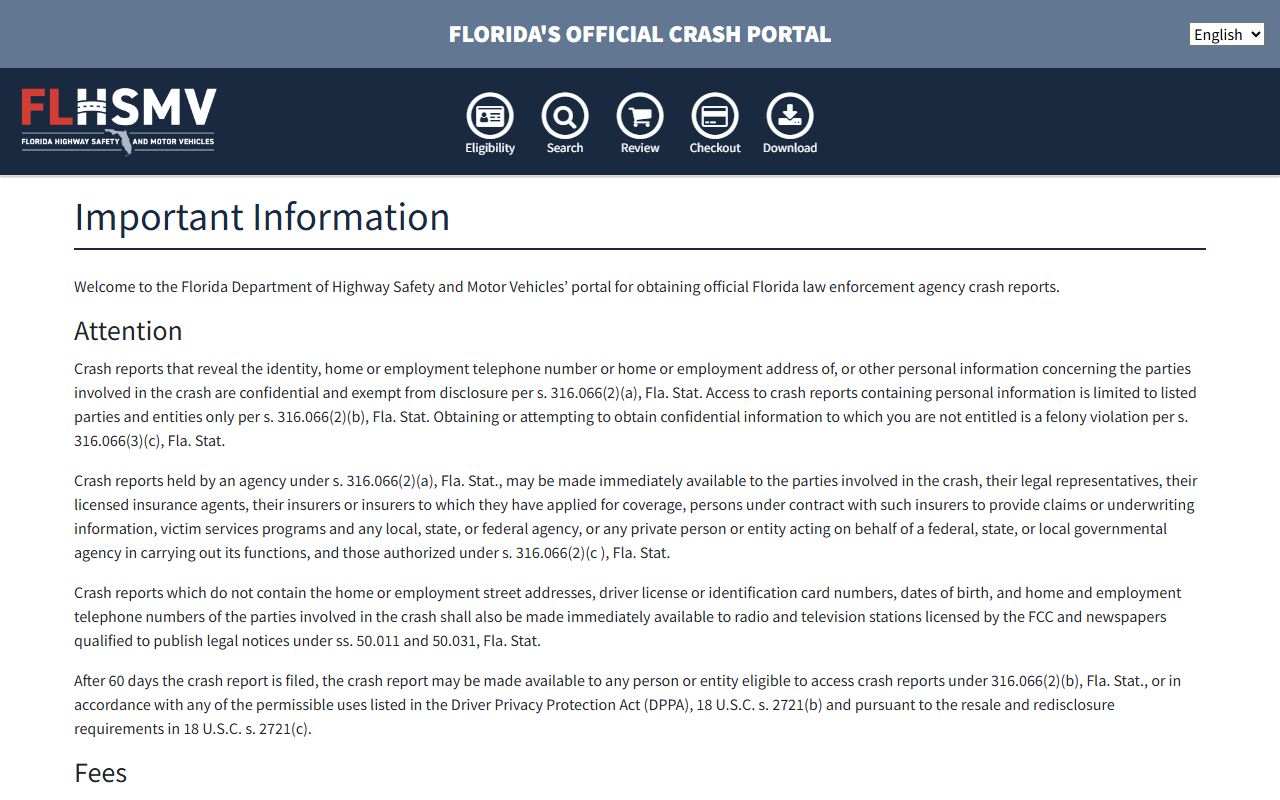
For crash reports, the Florida Crash Portal at services.flhsmv.gov/CrashReportPurchasing is the primary system. You need the crash date, location, and at least one driver name to search. The portal charges $10 per report plus a $2 online fee. Florida Statute 316.066 requires a 60-day confidentiality period for crash reports. During those 60 days, only parties involved, their lawyers, insurers, and certain government agencies can access reports. After 60 days, anyone can purchase them.
In-person searches work well when you need certified copies or want to review full case files. Visit the sheriff's office or police department records window. Bring identifying information about the incident such as date, location, and names involved. Staff will search their records system and provide available documents. Most agencies charge $0.15 per single-sided page or $0.20 per double-sided page for copies.
Note: Crash reports within the 60-day window require a sworn affidavit on form HSMV-94010 to prove you are an authorized party.
Types of Police Blotter Records in Florida
Incident reports document calls for service and police investigations in Florida. Officers write these reports after responding to crimes, disturbances, or other events. A typical incident report includes the date, time, and location of the event, names of people involved, witness statements, and officer observations. These reports form the core of the police blotter. You can request them from the agency that responded to the call.
Arrest records show when law enforcement takes someone into custody. Florida booking records include the arrestee's name, booking photo, charges filed, bond amount, and booking date. Many sheriff's offices post booking information online within hours of an arrest. These jail booking blotters are public and searchable by name or booking date.
Traffic crash reports are a special category under Florida law. The Florida Highway Patrol and local agencies file reports with the Department of Highway Safety and Motor Vehicles. Long-form crash reports contain driver information, vehicle details, crash diagrams, contributing factors, and officer narratives. Short-form reports cover minor crashes with no injuries.
Police blotter records in Florida typically contain:
- Date and time of the incident or arrest
- Location where it occurred
- Names of people involved
- Nature of the incident or charges
- Reporting officer and badge number
- Case or incident number
- Witness information and statements
Some records may be redacted or withheld under exemptions in Florida Statutes Section 119.071. Active criminal investigations, victim identities in certain crimes, and confidential informant details are often exempt from disclosure.
Florida Public Records Laws
Chapter 119 of Florida Statutes is the state's public records law. It establishes that all state, county, and municipal records are open for personal inspection and copying by any person. This broad policy applies to police blotter records unless a specific exemption applies. Florida courts have interpreted this law to favor disclosure.
Under Florida Statutes Section 119.07, agencies must allow inspection and copying during regular business hours. They can charge for the actual cost of duplication. Standard copy fees are $0.15 per single-sided page and $0.20 per double-sided page. Extensive use of IT resources or clerical assistance can result in additional service charges.
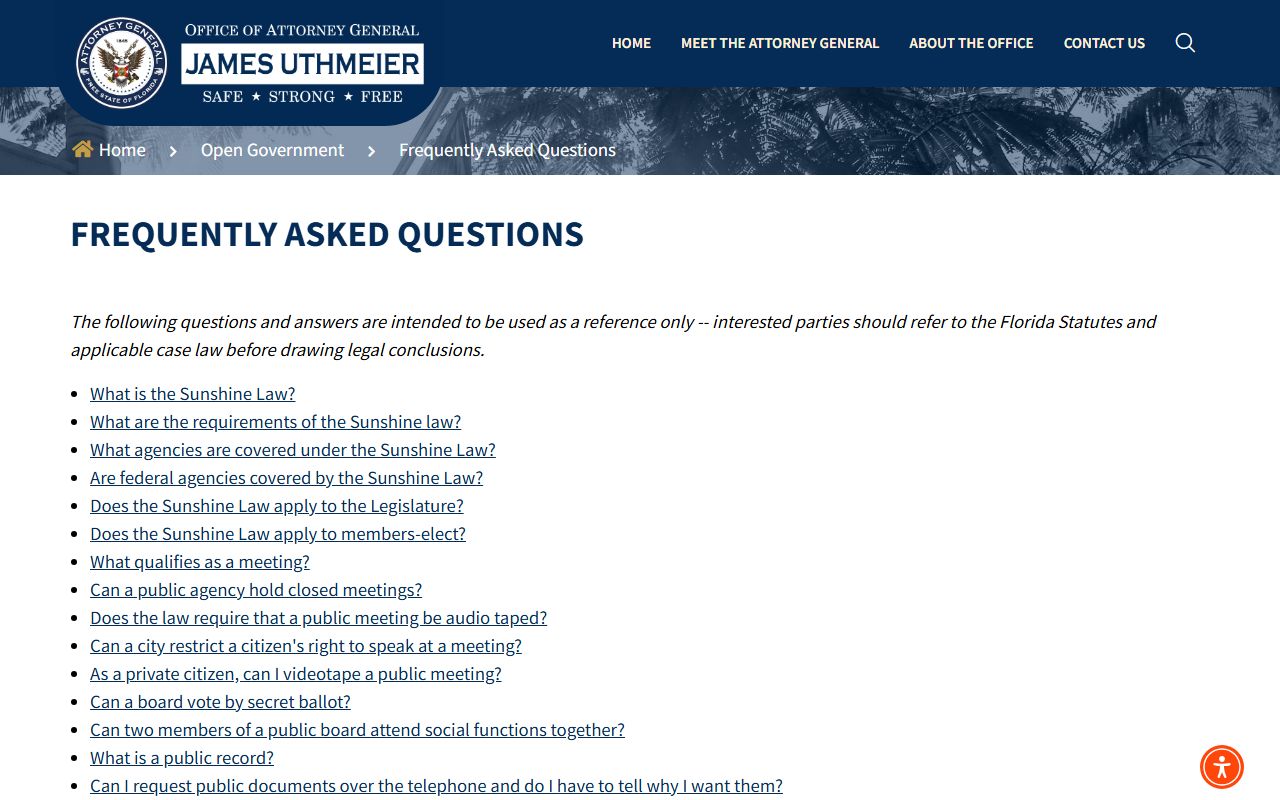
The Attorney General's Office publishes guidance on open government at myfloridalegal.com/open-government. The Government in the Sunshine Manual available at myfloridalegal.com/open-government/sunshine-manual explains public records rights in detail. The Attorney General also operates a voluntary mediation program for public records disputes.
Florida Statutes Section 316.066 governs crash report confidentiality. Reports remain confidential for 60 days after filing. Unauthorized disclosure during this period is a third-degree felony punishable by up to five years in prison. Civil penalties include a minimum of $2,500 in liquidated damages plus attorney fees. After 60 days, crash reports become public records available to anyone.
Florida Statutes Section 119.071 lists numerous exemptions to public records access. Active criminal investigative information is exempt until the investigation concludes or becomes inactive. Personal identifying information of victims in sexual offense cases remains confidential. Home addresses and personal phone numbers of law enforcement officers are exempt from disclosure.
Police Blotter Record Fees
Fees vary by agency and record type in Florida. Most sheriff's offices and police departments charge the standard statutory rate of $0.15 per single-sided page and $0.20 per double-sided page for paper copies. Certified copies typically cost $1.00 per page. Some agencies waive fees for small requests under 20 pages or 15 minutes of staff time.
Crash reports cost $10.00 per report when purchased through the Florida Crash Portal. An additional $2.00 convenience fee applies to online transactions. The portal accepts credit cards and allows up to 10 reports per transaction. Reports purchased online are available for download within 48 hours.
Service charges apply when a records request requires extensive clerical time or IT resources. Agencies calculate these charges based on employee hourly rates plus benefits. Requesters receive an estimate before work begins on time-consuming requests. Most agencies accept payment by cash, money order, business check, or credit card. Personal checks are often not accepted.
How to Get Copies of Police Blotter Records
To request incident reports or arrest records, contact the law enforcement agency that handled the case. Visit the agency website to find their public records request process. Many agencies use online portals where you submit request forms electronically. Include the incident date, location, case number if known, and names of people involved. Be specific to avoid delays and extra fees.
For in-person requests, visit the sheriff's office or police department during business hours. Ask for the records division or public information office. Staff will help you fill out a request form. You may receive records the same day for simple requests. Complex requests requiring staff research may take several days or weeks.
Mail requests work for agencies that accept them. Write a letter describing the records you want. Include the incident date, location, and any identifying information. Provide your contact information and preferred delivery method. Enclose payment if the agency requires prepayment. Mail the request to the agency's public records custodian at the address listed on their website.
Response times depend on request complexity and agency workload. Simple incident reports may be available within a few days. Requests requiring extensive searches or redactions can take weeks. Florida law does not set a specific deadline but requires agencies to respond promptly and in good faith. If an agency denies your request or fails to respond, you can contact the Attorney General's Office mediation program at 850-245-0140.
Crash reports purchased online through the Florida Crash Portal must be downloaded within 48 hours of the request. The portal emails a link when the report is ready. If you miss the download window, you must purchase the report again.
Resources for Florida Police Records
The Florida Department of Law Enforcement offers guides to public records requests. Their handbook available at fdle.state.fl.us explains how to submit requests and what records are available. FDLE maintains criminal history records, officer certification records, and complaint files against law enforcement personnel.
The Attorney General's Open Government page at myfloridalegal.com/open-government provides extensive resources on public records law. The site includes the Sunshine Manual, frequently asked questions at myfloridalegal.com/open-government/frequently-asked-questions, and guidance documents. The Public Records Guide for Law Enforcement helps agencies comply with disclosure requirements.
For crash data and statistics, the Florida Highway Safety and Motor Vehicles website at flhsmv.gov offers crash dashboards and annual reports. The Crash Dashboard at flhsmv.gov/traffic-crash-reports/crash-dashboard shows trends by county and roadway. Signal 4 at s4.geoplan.ufl.edu provides detailed crash data for government agencies and researchers.
If an agency denies your records request or charges excessive fees, the Attorney General's voluntary mediation program can help resolve disputes. Contact them at 850-245-0140 or through the open government website. The program provides neutral facilitation to reach agreement between requesters and agencies.
Are Police Blotter Records Public in Florida
Yes, most police blotter records are public in Florida. Under Chapter 119, Florida Statutes, all government records are presumed to be public unless a specific exemption applies. This includes incident reports, arrest records, and crash reports held by sheriff's offices and police departments. You do not need to be involved in the incident to request records. You do not need to state a reason for your request.
Some records are exempt from disclosure. Active criminal investigative information remains confidential until the investigation concludes or becomes inactive. Under Florida Statutes Section 119.071, victim identities in sexual offense cases are confidential. Law enforcement officer home addresses and personal information are exempt. Agencies must redact exempt information and provide the rest of the record.
Crash reports have a unique confidentiality period. Florida Statute 316.066 makes crash reports confidential for 60 days after the filing date. During this time, only parties involved, their legal representatives, insurers, and certain government agencies can access them. Unauthorized disclosure is a felony. After 60 days, crash reports become fully public and anyone can purchase them through the Florida Crash Portal.
Browse Florida Police Blotter by County
Each of Florida's 67 counties has a sheriff's office that maintains police blotter records for unincorporated areas. Many cities contract with the county sheriff for law enforcement services. Select a county below to find contact information and online resources for police records in that area.
Police Blotter in Major Florida Cities
Major cities in Florida operate their own police departments separate from the county sheriff. These municipal agencies maintain their own incident reports and booking records. Pick a city below to learn about police blotter records in that area.